
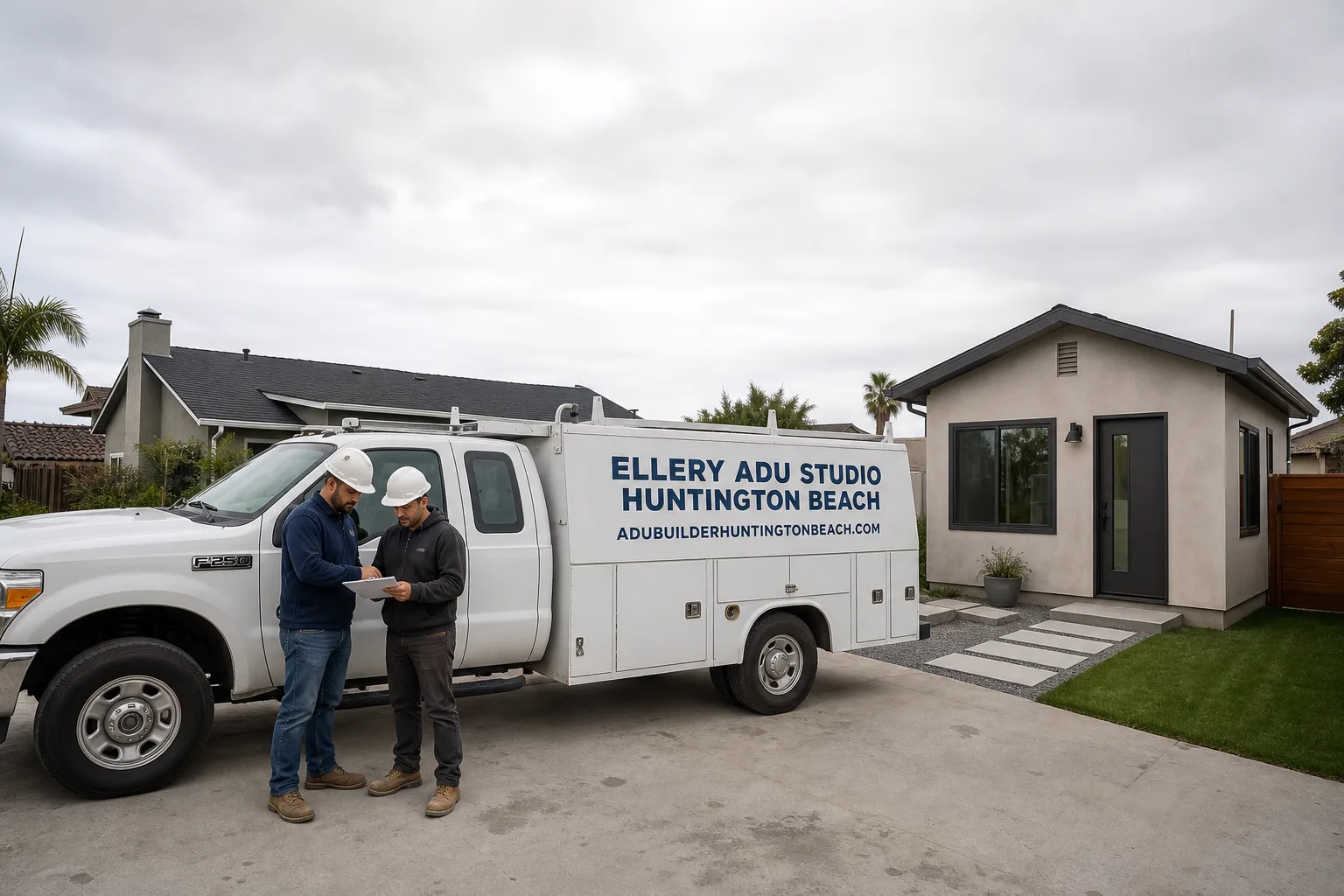
How Much Does a New Detached ADU Cost in Huntington Beach?
Our New Detached ADU services in Huntington Beach typically cost between $280,000 and $520,000, drawings through final inspection and certificate of occupancy. That range covers a single-contract, design-build delivery on a standard Huntington Beach residential lot – smaller studios land near the low end, two-bedroom units with premium finishes push toward the top. At Ellery ADU Studio, every project is quoted at a written price before any work begins, per Haven Standard Clause 1, so the number you see on paper is the number you pay.
New Detached ADU Cost Breakdown (2026)
The table below reflects current Huntington Beach labor rates, permit fees, and material costs as of early 2026. These are all-in figures – not base-build prices with a long list of exclusions added afterward.
| Line Item | Typical Cost Range | Notes |
|---|---|---|
| Architectural Design & Permit Set | $18,000 – $32,000 | Includes structural, Title 24 energy calcs, civil sheets |
| Huntington Beach City Permit Fees | $12,000 – $22,000 | Building, planning, and school district impact fees |
| Foundation (conventional slab) | $18,000 – $38,000 | Higher on lots near the coast with expansive or sandy soils |
| Framing & Exterior Shell | $55,000 – $95,000 | James Hardie fiber cement siding is our most common spec |
| Roofing | $14,000 – $26,000 | Flat membrane or composition shingle depending on design |
| Windows & Exterior Doors | $10,000 – $20,000 | Coastal zone glazing requirements apply in many HB neighborhoods |
| Plumbing (rough & finish) | $22,000 – $40,000 | New lateral connection to city main if no existing stub-out |
| Electrical (rough & finish) | $14,000 – $26,000 | Includes panel upgrade at main house if capacity is short |
| HVAC / Mechanical | $12,000 – $22,000 | Mini-split systems standard; Title 24 heat-pump requirement applies |
| Insulation & Drywall | $14,000 – $22,000 | Coastal fog and salt air mean we specify closed-cell at rim joists |
| Interior Finishes (kitchen, bath, flooring) | $30,000 – $70,000 | Widest variance line – spec level drives this more than unit size |
| Site Work & Utilities | $18,000 – $45,000 | Grading, drainage, gas line, utility trenching, concrete flatwork |
| Prefab / Modular Premium (if selected) | $0 – $35,000 net | Modular units (Abodu, Cover, Dvele) can reduce field labor but add factory cost |
| General Conditions & Overhead | $18,000 – $32,000 | Project management, insurance, dumpsters, temp power, inspections |
| Total – Studio or 1-BR (400-600 sf) | $280,000 – $360,000 | All-in, one contract, drawings through CO |
| Total – 1-BR or 2-BR (600-850 sf) | $330,000 – $430,000 | Most popular size on Huntington Beach R-1 lots |
| Total – 2-BR with premium finishes (850-1,200 sf) | $400,000 – $520,000 | Max unit size on most HB parcels; beach-adjacent lots often push here |
A few things move these numbers more than anything else. Coastal proximity is the first: lots west of Beach Boulevard, particularly in the Downtown Huntington Beach area and along Pacific Coast Highway, often hit soil and corrosion specifications that add $15,000 to $30,000 to foundation and exterior shell costs alone. School district impact fees are the second surprise – the Huntington Beach City School District and Huntington Beach Union High School District both assess fees that, combined, can exceed $10,000 on a 700-square-foot unit. And utility connections matter more than most homeowners expect: if the new structure sits more than 100 feet from the existing water and sewer laterals, trenching costs climb fast.
For projects where a factory-built system makes sense, we specify and coordinate modular units from brands including Abodu, Cover, Dvele, Mighty Buildings, Boxabl, and Plant Prefab within the same single contract – so you’re not managing a separate manufacturer relationship while also trying to manage a general contractor.
What Affects New Detached ADU Pricing in Huntington Beach
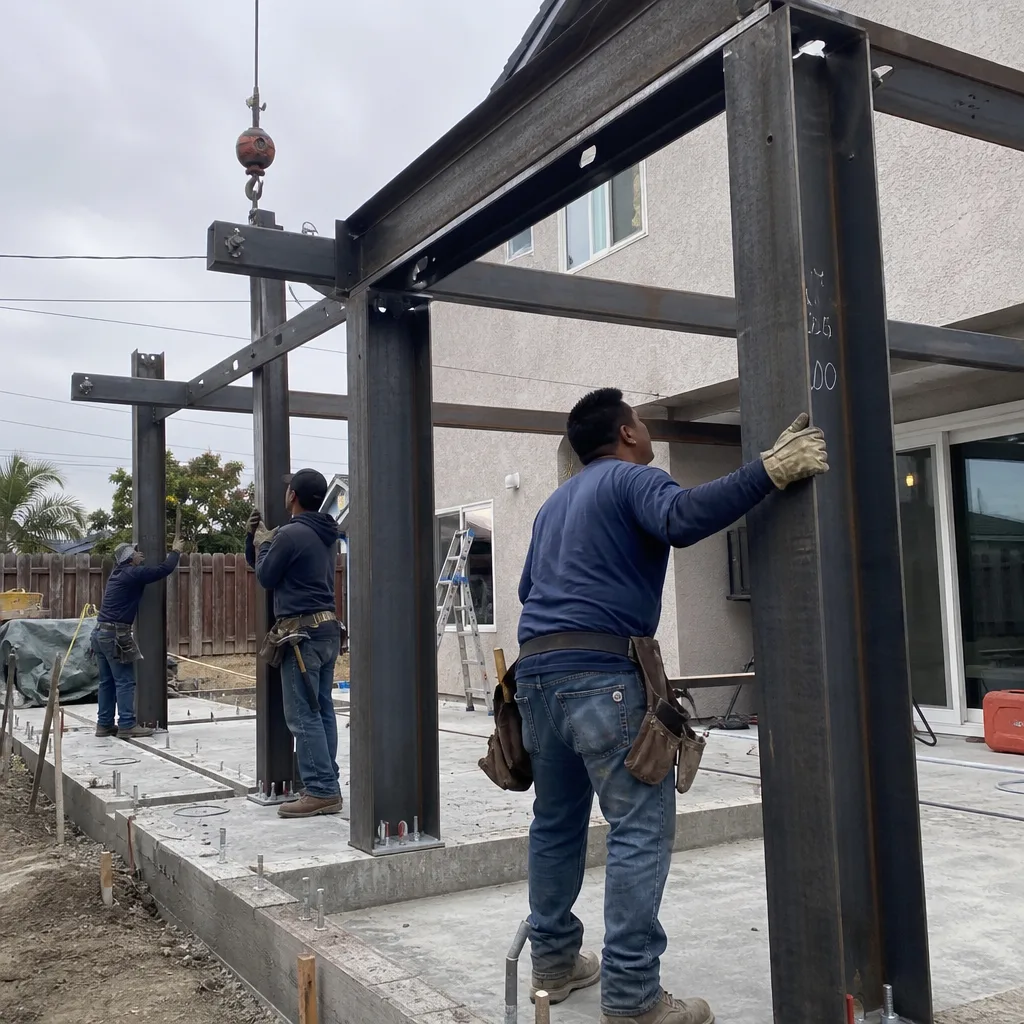
- Lot location relative to the coast: Properties within Huntington Beach’s coastal zone – roughly everything west of Goldenwest Street and south of Garfield Avenue – fall under Coastal Commission jurisdiction. That adds a coastal development permit layer, stricter design review, and materials specs that standard inland builds don’t require. We’ve processed coastal development permits for ADUs in the Sunset Beach, Bolsa Chica, and Downtown HB areas and know where the extra weeks and dollars hide.
- Existing utility infrastructure: A detached ADU needs its own water meter, separate sewer lateral in most configurations, and either a dedicated electrical sub-panel or an upgraded main panel at the primary residence. On older Huntington Beach lots – particularly in Huntington Harbour and the older inland tracts east of Newland Street – the existing service is often undersized. Budget for a panel upgrade if the main house is running on a 100-amp service.
- Soil conditions: Huntington Beach sits on a coastal plain with a water table that runs shallow in several neighborhoods. Lots near the Bolsa Chica wetlands and along the Slater Slough corridor sometimes require deeper footings or a post-tension slab, which adds cost but is non-negotiable once the soils report comes back. We order the geotechnical report early – before the design is locked – so there are no foundation surprises mid-project.
- Unit size and ADU type (stick-built vs. modular): California law caps most single-family ADUs at 1,200 square feet, but Huntington Beach’s own zoning overlays sometimes push the practical limit lower depending on lot coverage and setback math. A 500-square-foot studio costs less per square foot than an 850-square-foot two-bedroom in absolute terms, but the per-square-foot rate is often higher on smaller units because mechanical and plumbing core costs don’t shrink proportionally.
- Finish level: Interior finishes are the single biggest variable in the budget after site conditions. A tile selection, cabinetry tier, and appliance package decision can swing the interior finishes line by $25,000 to $40,000 without changing a single exterior dimension. We present finish packages – entry, mid, and elevated – with prices attached, not mood boards with TBD costs.
- Setback compliance and design complexity: Huntington Beach requires a minimum five-foot rear and side setback for most detached ADUs under state ADU law, but lot-specific conditions – easements, prior permit history, HOA CC&Rs in places like Seacliff – can trigger a setback variance request, which adds time and cost. ADUs with complex rooflines, second-story elements, or architectural features that require structural engineering beyond standard wood-frame design also push the design fee up.
How to Save on a New Detached ADU in Huntington Beach
The most reliable way to control cost on a new detached ADU in Huntington Beach is to lock the scope before any money changes hands. That sounds obvious, but the standard industry practice – separate design contract, then bid the construction later – creates a gap where cost growth hides. Our one-contract model closes that gap: the drawings and the build are priced together, in writing, before the project starts. That’s Haven Standard Clause 1, and it’s not a selling point we invented – it’s a structural protection against the designer-versus-builder blame cycle that ends more ADU projects in Huntington Beach than bad weather does.
Beyond structure, here are the practical levers that actually move the number:
- Start with a site assessment, not a floor plan: Most cost overruns on Huntington Beach ADU projects trace back to a design that was drawn before anyone looked hard at the soil, the utilities, or the coastal permit status. We assess the site first. That takes a few hours and prevents a $30,000 foundation redesign six weeks into construction.
- Consider a modular or prefab unit if your lot qualifies: On a straightforward lot with good access and no coastal jurisdiction complications, a factory-built unit from a brand like Abodu or Plant Prefab can compress the construction schedule by eight to twelve weeks compared to stick-build. A shorter schedule means lower general conditions costs and a faster path to rental income. We’ll tell you honestly whether a modular unit makes sense on your specific lot – it doesn’t always.
- Don’t over-spec the interior on a rental unit: If the ADU is intended as a long-term rental, mid-level finishes – LVP flooring, semi-custom cabinetry, a standard tile package – perform nearly as well as premium finishes in Huntington Beach’s rental market while keeping the interior finishes line $20,000 to $35,000 lower. We see homeowners spend toward the top of the interior range and recover it slowly; we see others hit the mid-range and lease within 30 days of CO.
- Get a second opinion on any estimate you already have: If another firm has given you a written quote, bring it to us. We offer a Free Second Opinion on any written estimate – we’ll read it line by line and tell you what’s solid, what’s vague, and where the cost risk is hiding. That’s not a sales call; it’s a document review.
- Time the permit submission strategically: Huntington Beach’s Building Division has processing windows that vary by season and staff load. Submitting a complete, well-documented permit set in February tends to move faster than a submission in August when new construction volume peaks. We track those windows and submit when the queue is shorter – which saves real weeks on the project timeline.
To get a written price on your specific project, call us at (562) 263-3350. A live person answers – no voicemail queue. The estimate is free, and it’s written before any work starts.
Prefab and Modular ADU Options in Huntington Beach

Prefab and modular ADUs get more attention than they deserve in some markets and less than they deserve in others. In Huntington Beach, the picture is specific: factory-built units work well on inland lots with straightforward site access, good soil bearing capacity, and no coastal development permit requirement. On lots in Sunset Beach or the Downtown core where a crane placement alone requires street coordination with the city, the logistics of setting a modular box can erase the schedule advantage.
We work with Cover, Dvele, Mighty Buildings, Boxabl, and Tuff Shed structures in addition to the better-known names, and we’ve learned where each system performs and where it doesn’t. A Mighty Buildings unit, for example, handles the coastal corrosion environment better than most wood-frame prefab systems because the composite shell isn’t susceptible to salt-air degradation the way OSB sheathing is. That matters on a lot four blocks from the beach. A Boxabl unit is priced for a different use case – smaller footprint, fast deployment – and works best when a client needs a legal studio at the low end of the budget envelope.
What we don’t do is recommend a prefab brand because it shortens the sales conversation. We run the lot analysis first, then present the options – stick-built, panelized, or modular – with the cost and timeline comparison in writing. You decide with numbers in front of you, not a brochure.
The Permit Process for a New Detached ADU in Huntington Beach
Huntington Beach processes ADU permits under both California’s state ADU law (Government Code Section 65852.2) and its own municipal code. The city has streamlined considerably since 2020, but a new detached ADU still requires a full building permit set: architectural drawings, structural calculations, a Title 24 energy compliance report, civil/grading plans if there’s significant site work, and MEP (mechanical, electrical, plumbing) plans. For lots in the coastal zone, add a Coastal Development Permit application, which goes to the city’s Zoning Administrator and sometimes triggers a public hearing.
The permit set is our core product. Not an afterthought we hand off to a third party. Every drawing that goes to the Huntington Beach Building Division comes out of our studio with the structural and energy compliance documentation attached. We’ve submitted enough ADU permit sets in Huntington Beach to know which plan-check comments come back routinely – missing egress window dimensions on sleeping rooms, inadequate attic ventilation calculations on low-slope roofs, water heater expansion tank requirements that the city started enforcing more consistently in 2024 – and we address those issues before we submit, not in response to a correction notice three weeks later.
Typical Huntington Beach plan-check timelines for a new detached ADU run eight to fourteen weeks for first review. We recommend building that into the project schedule, not hoping it comes back faster. The full permit-through-certificate-of-occupancy timeline on a stick-built detached ADU in Huntington Beach is currently running 14 to 22 months depending on site conditions, finish scope, and inspection scheduling.
Huntington Beach Rental Market Context: Does the Math Work?
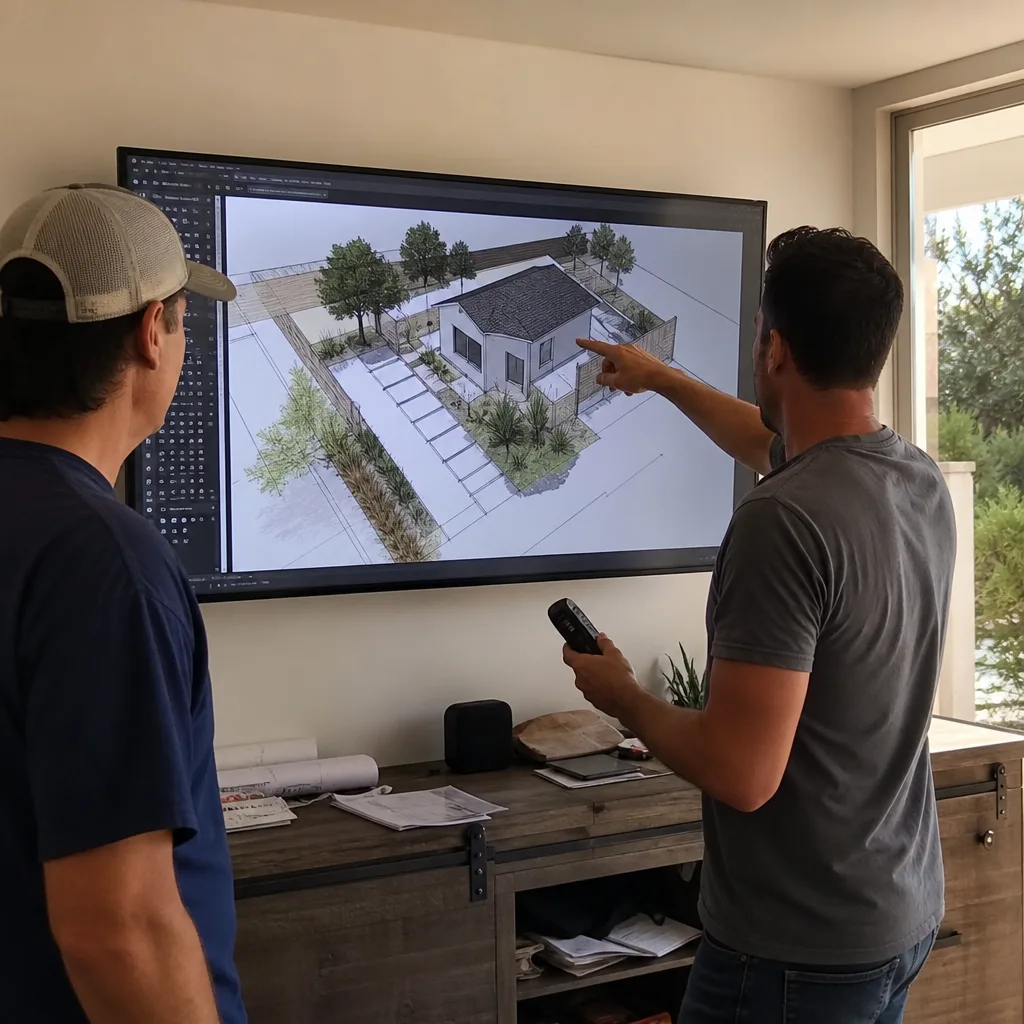
The question behind the cost question is always: what does this return? In Huntington Beach, a well-finished one-bedroom detached ADU in neighborhoods like Fountain Valley-adjacent Newland, the Old Town HB area, or the residential streets east of Magnolia Street is currently renting for $2,200 to $2,900 per month depending on condition and proximity to the coast. A two-bedroom unit in the same corridors ranges from $2,800 to $3,600 per month.
On a $380,000 all-in project cost for a 700-square-foot one-bedroom, a rent of $2,500 per month represents a gross yield of roughly 7.9% before vacancy and maintenance. That’s meaningfully higher than what you’d get from a bond or a savings account in 2026, and the asset sits on land you already own. We’re not financial advisors and we don’t pretend to be, but we can put the construction cost in writing before you decide whether the return justifies it – which is more than most firms will do at the estimate stage.
The other use case we see often in Huntington Beach is multigenerational housing: a detached ADU built for an aging parent or a returning adult child. In that scenario, the rental yield math matters less than the construction cost and the permit timeline. We give both in writing from the first meeting.
Why a One-Contract Design-Build Model Matters for a Six-Figure Project
Most ADU projects in Huntington Beach are structured as two separate engagements: an architect or designer handles the drawings, then the homeowner bids the construction to contractors. That structure creates a gap. When the framing doesn’t match the drawings, the architect says it’s the contractor’s fault. When the drawings can’t be built as specified, the contractor says it’s the architect’s fault. The homeowner is in the middle, paying for both arguments.
At Ellery ADU Studio, the drawings and the construction are one contract at one written price. We designed it, we permit it, we build it. If the finished ADU doesn’t match the permitted drawings, the 365-Day Done Right Promise covers it – in writing, before the project starts. That’s not a marketing claim; it’s a contractual commitment with a named clause and a defined remedy.
Nadia Ellery built the studio around this structure in 2015 because the designer-versus-builder blame gap was already the most common reason Huntington Beach ADU projects failed or went over budget. Eleven years and more than 900 ADUs later, the structure hasn’t changed. The drawings are still the core product. The price is still in writing before any work starts. And the 365-Day Done Right Promise still applies to every unit we build.
You can read more about how that works on our New Detached ADU in Huntington Beach service page, or start from the home page if you want an overview of everything Ellery ADU Studio covers.
Key Takeaways

- New detached ADUs in Huntington Beach cost $280,000 to $520,000 all-in, depending on size, site conditions, and finish level.
- Coastal zone lots, soil conditions near the water table, and school district impact fees are the three most common sources of cost surprises in Huntington Beach specifically.
- Permit fees alone – building, planning, and school district combined – typically run $12,000 to $22,000 on a new detached ADU in Huntington Beach.
- The permit-through-certificate-of-occupancy timeline is currently 14 to 22 months on a stick-built unit; modular and prefab systems can compress that on qualifying lots.
- A one-contract design-build model with a written price before work starts is the most reliable structural protection against cost overruns on a six-figure project.
- One-bedroom detached ADUs in Huntington Beach are renting for $2,200 to $2,900 per month, which supports meaningful gross yields on a well-scoped project.
- Every Ellery ADU Studio project is covered by the 365-Day Done Right Promise – documented in writing before the project starts.
FAQs – New Detached ADU Cost in Huntington Beach
How much does a new detached ADU cost in Huntington Beach in 2026?
A new detached ADU in Huntington Beach costs $280,000 to $520,000 all-in – that’s drawings, permits, construction, and the certificate of occupancy under a single contract. A studio or one-bedroom unit in the 400-600 square foot range typically lands between $280,000 and $360,000. A two-bedroom with mid-to-premium finishes at 850-1,200 square feet runs $400,000 to $520,000. Lots in Huntington Beach’s coastal zone, particularly west of Beach Boulevard and near Pacific Coast Highway, tend to push toward the higher end due to soil and coastal permit requirements. Call (562) 263-3350 for a written estimate on your specific lot – it’s free and comes with a firm number, not a range with a long list of exclusions.
What are the permit fees for a new detached ADU in Huntington Beach?
Permit fees for a new detached ADU in Huntington Beach typically total $12,000 to $22,000, covering the city building permit, planning fees, and school district impact fees from both the Huntington Beach City School District and Huntington Beach Union High School District. Coastal zone projects add a Coastal Development Permit fee on top of that. The exact figure depends on the assessed value of the structure and the square footage, so we calculate it for your specific unit size before we give you a written project price. Call (562) 263-3350 to get that number.
How long does it take to build a new detached ADU in Huntington Beach?
From permit submission to certificate of occupancy, a new detached ADU in Huntington Beach currently takes 14 to 22 months on a stick-built unit. Huntington Beach’s Building Division typically takes 8 to 14 weeks for first plan-check review, and construction on a standard 600-800 square foot unit runs 5 to 8 months after permits are issued. Modular and prefab units from brands like Abodu or Cover can compress the construction phase by 8 to 12 weeks on lots that don’t require coastal permits or complex site work. We build the permit timeline into the project schedule from day one – not as an optimistic estimate, but as a documented milestone plan. Call (562) 263-3350 if you need a timeline specific to your lot.
Is it cheaper to build a modular ADU or a stick-built ADU in Huntington Beach?
On a straightforward inland Huntington Beach lot, a modular ADU from a brand like Abodu, Plant Prefab, or Dvele can cost $20,000 to $40,000 less than a comparable stick-built unit when you factor in the shorter construction schedule and lower general conditions overhead. But modular systems carry factory and delivery premiums that partially offset those savings, and on coastal zone lots with crane-access constraints or soil issues, the logistics cost can eliminate the advantage entirely. We run the comparison for every project with numbers attached – not a preference for one system over the other. Call (562) 263-3350 and we’ll tell you which approach makes more financial sense on your specific parcel.
Can I rent out my new detached ADU in Huntington Beach right away after it’s built?
Yes – once the city issues a certificate of occupancy, the unit is legally rentable under California law. There’s no additional waiting period. Huntington Beach does have short-term rental regulations that restrict Airbnb-style use in most residential zones, so if you’re planning nightly rentals rather than a standard 30-day-plus lease, confirm your parcel’s short-term rental status before you design the unit around that use case. Long-term rentals are straightforward: CO in hand, lease signed, tenant in. One-bedroom detached ADUs in Huntington Beach are currently renting for $2,200 to $2,900 per month, depending on neighborhood and finish level. Call (562) 263-3350 if you want to talk through how the rental math works against your construction cost before you commit to a scope.
Written by Nadia Ellery, Owner at Ellery ADU Studio, serving Huntington Beach since 2015. Pricing reflects the Huntington Beach market as of 2026. Ellery ADU Studio Huntington Beach offers free written estimates – call (562) 263-3350.
What Our Customers Say
"The rental income has covered the payment since the second month. They were realistic about the numbers rather than optimistic."
- Odette N."Handled the whole planning process. We went to one hearing and that was it."
- Rowena C."They walked us through setbacks and utility capacity before we paid anything, and told us one of our two options was not going to get approved."
- Mireille T.