
Last updated September 25, 2026
ADU Warning Signs: A Huntington Beach Homeowner’s Reference Guide
The California Contractors State License Board logged over 19,000 complaints in 2023, and “failure to complete” topped the list. In nearly every case we review at Ellery ADU Studio Huntington Beach home, the dispute was already visible in the contract, the permit set, or the payment schedule, weeks before the first wall went up. Huntington Beach homeowners, working with some of the strictest coastal zoning and energy codes in the state, face amplified risk: a poorly structured ADU project here can stall for months on a soils report or a Title 24 rejection that should have been caught at permit submission. This guide shows you exactly what to look for, when to look for it, and how to verify what you’re being told.
Quick Answer
The warning signs that an ADU project will end in dispute almost always appear before construction starts: a bid delivered without permit-ready drawings, a down payment demand above 10%, missing CSLB license numbers, permit applications lacking coastal soils reports or Title 24 compliance paths, and change orders with vague scope and no unit pricing. Verify insurance directly with the insurer, not from the certificate alone.
Table of Contents

- Pre-Contract Red Flags: What to Catch Before You Sign
- Permit-Stage Red Flags: The Documents That Expose a Weak Project
- Construction-Stage Red Flags: What Happens After Ground Breaks
- Financial Red Flags Hidden in Change Order Language
- How to Verify Contractor Insurance the Right Way
- Huntington Beach-Specific Risks: Coastal Code, Climate, and Soil
- What a Clean Contract Looks Like: The Haven Standard
- Common Mistakes to Avoid
- When to Call a Professional
- Frequently Asked Questions
Pre-Contract Red Flags: What to Catch Before You Sign
Most homeowners in Huntington Beach begin their ADU search with a contractor referral, How to Hire a ADU Contractor in Huntington Beach: A Step-by-Step Guide, or a Google search for “ADU contractor warning signs Huntington Beach.” The real danger starts earlier, in the first document exchange.
The Bid Arrives Before the Permit-Ready Drawing Set
A construction bid without a stamped, permit-ready drawing set is an estimate disguised as a contract. In our experience reviewing competitor documents for clients seeking our ADU Design & Permitting in Huntington Beach, we’ve seen bids with hand-sketched floor plans and no structural calculations. These cannot be permitted. The contractor is guessing at scope, and the final price typically drifts 30-50% higher once real drawings force material and labor realities into view.
At Ellery ADU Studio, the permit set is the core product. Our single-contract design-build model means the drawings, the engineering, and the construction price are developed together. You receive a written price only after the permit set is complete enough to build from. This eliminates the designer-versus-builder blame gap that derails most projects.
The Down Payment Exceeds 10% or $1,000
California Business and Professions Code §7159.5 caps residential down payments at the lesser of 10% or $1,000. A contractor who requests more is either unaware of basic state law or betting you won’t enforce it. We’ve seen Huntington Beach homeowners hand over $25,000 “to secure materials” on projects that never broke ground. The CSLB complaint data shows this pattern repeatedly: large upfront payments correlate with “failure to complete” at rates far above the state average.
No CSLB License Number on the Estimate Header
Every legitimate California contractor must display their CSLB license number on all advertising, contracts, and estimates. Its absence is not an oversight; it’s a deliberate opacity tactic. Verify any number at cslb.ca.gov. Check that the classification includes B-General Building or the appropriate specialty, and that the license status is “Active” with no pending disciplinary actions.
Verbal Promises Not Reflected in Writing
“We’ll handle the permits” means nothing if the contract assigns permit submission to the owner. “High-end finishes included” collapses when the allowance is $8 per square foot for flooring. Every promise must appear in the scope document with specificity: material grades, model numbers where applicable, and completion criteria. Under Haven Standard Clause 1, our written price includes every line item from foundation to final paint, with no placeholder allowances.
Pressure to Sign Before a Review Period
Three business days is the minimum reasonable review period for a six-figure construction contract. Any pressure to sign immediately, whether framed as “material price holds” or “permit queue positioning,” is a tactic to prevent due diligence. Genuine design-build studios in Huntington Beach do not operate on scarcity theater.
Permit-Stage Red Flags: The Documents That Expose a Weak Project
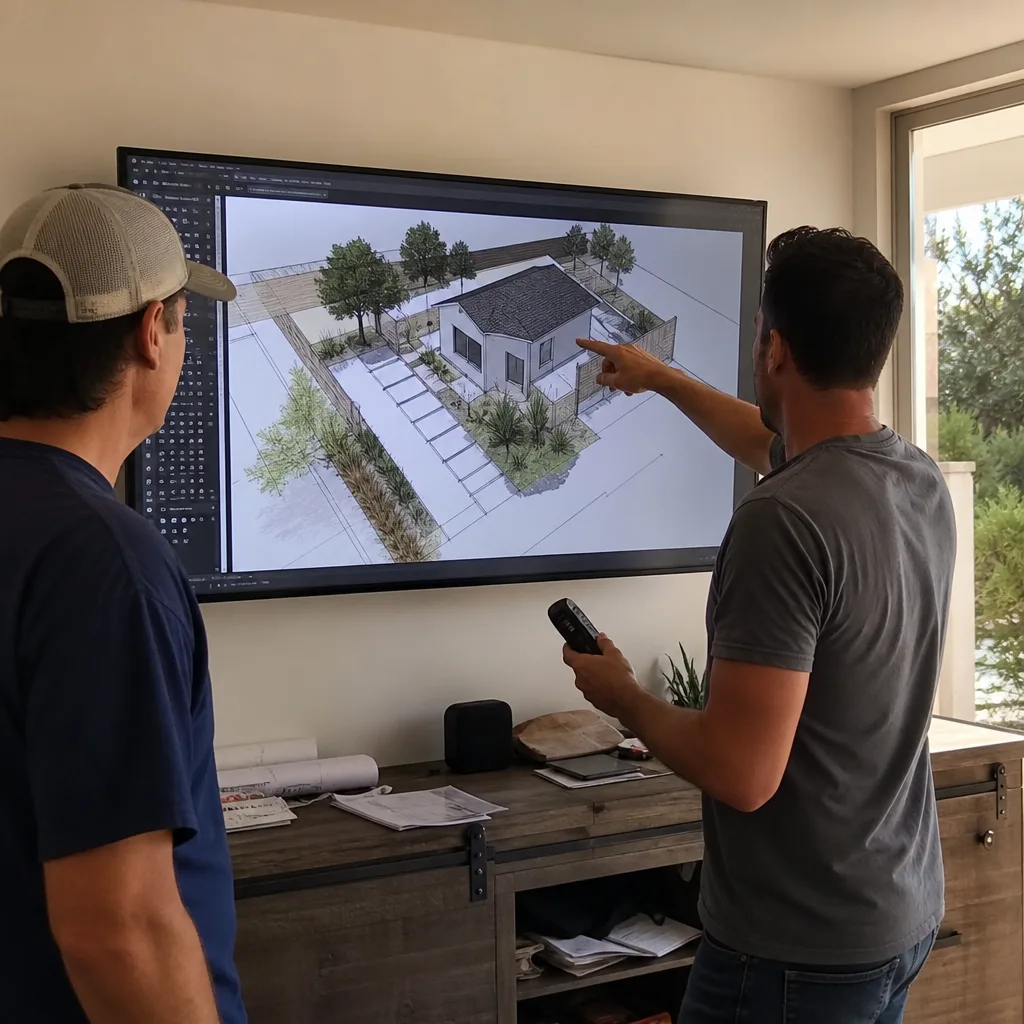
The permit set is where most ADU projects in Huntington Beach live or die. The city sits on coastal soils with active liquefaction zones, and its energy code enforcement is among the strictest in Orange County. A permit application that clears these hurdles cleanly indicates professional competence; one that doesn’t reveals structural problems in the project team.
Missing Soils Report on Coastal Lots
Huntington Beach’s western neighborhoods, from Sunset Beach south to Huntington Harbour, sit on fill and alluvial soils with high groundwater. The Huntington Beach Community Development Department typically requires a geotechnical soils report for any new foundation work in these zones. A permit application submitted without one will be rejected, adding 6-10 weeks to the timeline while the report is produced.
Worse: some contractors begin excavation on a “permit pending” basis, discover unsuitable soils, and present the homeowner with a $15,000-$40,000 change order for over-excavation and engineered fill. The red flag is visible at permit submission. Ask to see the soils report before work begins. If the contractor claims it’s “not needed,” verify directly with the city: (562) 263-3350.
Energy Calculations with No Title 24 Compliance Path
California’s Title 24 energy standards require every ADU to demonstrate compliance through approved software calculations: CBECC-Res for prescriptive paths, or EnergyPro for performance paths. A permit set with no energy compliance documentation, or with a handwritten note saying “complies with prescriptive package,” will be rejected.
In Huntington Beach’s mild coastal climate, the prescriptive path is often achievable with standard insulation and HVAC sizing, but the calculations must be present and correct. We’ve reviewed competitor permit sets where the energy page was literally blank, or where the HERS rater was listed as “TBD.” These are not minor omissions. They indicate either incompetence or an intention to address compliance reactively, at the homeowner’s expense, after rejection.
Out-of-State Engineer Stamps
California requires structural calculations stamped by a California-licensed civil or structural engineer. An out-of-state stamp, even from a fully licensed engineer elsewhere, is invalid for California permit submission. We’ve seen this most frequently with modular and prefab systems: the manufacturer provides generic calculations stamped in their home state, and the local contractor fails to engage a California engineer for site-specific adaptation.
This is particularly relevant for Huntington Beach homeowners considering New Detached ADU in Huntington Beach using systems from brands like Mighty Buildings or Plant Prefab. These are legitimate products, but their integration into a California permit set requires California-licensed engineering for foundation design, seismic anchorage, and local wind load calculations. Ellery ADU Studio coordinates this within our single contract; contractors who don’t are a change order waiting to happen.
Plan Sets with No Drainage or Grading Plan
Huntington Beach’s flat terrain and winter storm patterns create unique drainage challenges. A permit set without a grading and drainage plan, or with a generic note to “slope away from structure,” fails to address how the ADU integrates with existing site drainage. In the Mesa Verde and South Huntington Beach areas, where lot sizes are smaller and impervious surface limits are tighter, this omission can trigger planning department rejection even after building permit approval.
Construction-Stage Red Flags: What Happens After Ground Breaks
Construction-stage problems are the most visible, but they’re usually symptoms of earlier failures. Still, homeowners who catch these signs early can sometimes limit damage.
Work Proceeds Without a Posted Permit Card
California law requires the building permit card to be posted visibly on the job site before work begins. Its absence means either the permit hasn’t issued, or the contractor is working without one. Both are serious violations. In Huntington Beach, unpermitted work on an ADU can trigger stop-work orders, fines, and mandatory demolition if the structure encroaches on setbacks or exceeds height limits.
Verify permit status through the city’s online portal or by calling the building division. The permit number on the card should match the application you were shown during contract review.
Subcontractors Arrive Before You Receive a Subcontractor List
California law requires prime contractors to disclose all subcontractors who will perform work exceeding $500 in value. This disclosure must occur before work begins, typically as an attachment to the contract. If plumbers, electricians, or framers appear on your property and you don’t know their company names, something is wrong.
The practical risk: unlisted subcontractors may be unlicensed, uninsured, or working under payment disputes with the prime contractor. If the prime fails to pay them, California mechanics lien law allows them to lien your property. Our design-build model uses background-checked, uniformed crews whose license numbers appear in every project file; we provide the complete subcontractor list at contract signing, per Haven Standard Clause 3.
Inspection Failures “Corrected” Without Re-Inspection Request
Every failed inspection requires a re-inspection after correction. A contractor who claims to have “taken care of it” without showing you the passed re-inspection tag is asking you to trust what you cannot verify. In Huntington Beach, where the building department uses a digital inspection tracking system, you can verify pass/fail status online with the permit number.
Common hidden failures we encounter: structural hold-downs installed without proper embedment depth, electrical panels with no AFCI protection on required circuits, and gas line pressure tests performed without the inspector present. These are safety-critical items, not cosmetic shortcuts.
Material Substitutions Without Written Approval
The contract specifies CertainTeed Landmark shingles; the roof arrives with an unbranded three-tab product. The contract calls for R-19 wall insulation; the cavities are filled with R-13 batts. These substitutions, often framed as “equivalent or better,” rarely are. They represent cost savings to the contractor at your expense, and they may compromise energy compliance or warranty coverage.
Under Haven Standard Clause 5, any material substitution requires your written approval and a corresponding price adjustment, up or down, before installation. No door-side decisions, no “while we were at it” surprises.
Financial Red Flags Hidden in Change Order Language

Change orders are where ADU budgets die. The typical Huntington Beach ADU project generates 3-5 formal change orders in a well-managed build; poorly managed projects can see 15 or more, adding 20-40% to the final cost. The seeds are planted in the original contract language.
Vague Scope Descriptions
A change order reading “additional concrete work, $4,500” tells you nothing. How many square feet? What strength? With or without reinforcement? A proper change order references a specific plan revision, quantifies materials and labor separately, and ties to a documented field condition that necessitated the change.
No Unit Pricing
Unit pricing, established in the original contract, prevents arbitrary charges. Example: “Concrete, $18 per square foot, 4-inch slab with #3 rebar at 18-inch centers.” When a field condition requires additional concrete, the unit price applies. Without it, the contractor can charge whatever the market will bear in that moment.
Our contracts include unit pricing for all common variable items: concrete, framing lumber, drywall, roofing, and electrical fixtures. When a change is necessary, the math is transparent.
No Tie to a Specific Plan Revision
Every change order should reference the plan sheet and detail number that was modified. “Revision to foundation detail A3.1, per geotechnical recommendation dated March 15” is traceable. “Foundation adjustment per soils” is not. The former allows you to verify necessity with the engineer; the latter invites fabrication.
Progress Payments Tied to Calendar Dates, Not Milestones
A payment schedule reading “25% due March 1, 25% due April 1” incentivizes the contractor to show up, not to complete work. Proper schedules tie payments to verified milestones: foundation complete and inspected, framing complete and inspected, rough utilities complete and inspected. Each payment is contingent on a passed inspection, not a calendar page.
Retention Below 10%
California allows homeowners to retain 10% of each progress payment until final completion. This is your leverage for punch list completion and correction of defects. Contractors who negotiate retention below 5%, or who structure payments to eliminate retention entirely, are systematically removing your financial protection.
How to Verify Contractor Insurance the Right Way
Insurance certificates are easy to forge and easier to misunderstand. The certificate shows coverage existed on the date it was printed; it does not confirm current status, adequate limits, or that your project is covered. Here’s how to verify properly.
- Request the certificate directly from the insurer. Ask the contractor for their insurance agent’s contact information, then request the certificate yourself. This eliminates the risk of document manipulation.
- Confirm general liability limits. For ADU construction in Huntington Beach, minimum adequate coverage is $1 million per occurrence and $2 million aggregate. Projects involving significant site work or coastal access may warrant higher limits.
- Verify workers’ compensation coverage. California requires workers’ comp for all contractors with employees. The certificate should list the contractor’s CSLB license number and show no lapses in coverage. Sole proprietors without employees may be exempt, but any subcontractor on your project must carry their own policy.
- Check additional insured status. Request to be named as an additional insured on the general liability policy for the duration of your project. This provides direct coverage under the contractor’s policy if a claim arises from their work.
- Confirm the policy is active through project completion. Ask the insurer to confirm in writing that coverage will not lapse during your projected construction period. For ADU projects in Huntington Beach, typical duration is 6-10 months from permit to final.
- Verify with the insurer, not the agent, if concerned. Call the insurer’s policy verification line directly. Provide the policy number and ask for confirmation of active status, coverage limits, and any claims history that might affect renewal.
We’ve seen certificates in Huntington Beach showing coverage that lapsed two months prior, or with limits of $300,000 per occurrence, inadequate for any construction project involving structural work. The five-minute verification call prevents catastrophic exposure.
Huntington Beach-Specific Risks: Coastal Code, Climate, and Soil
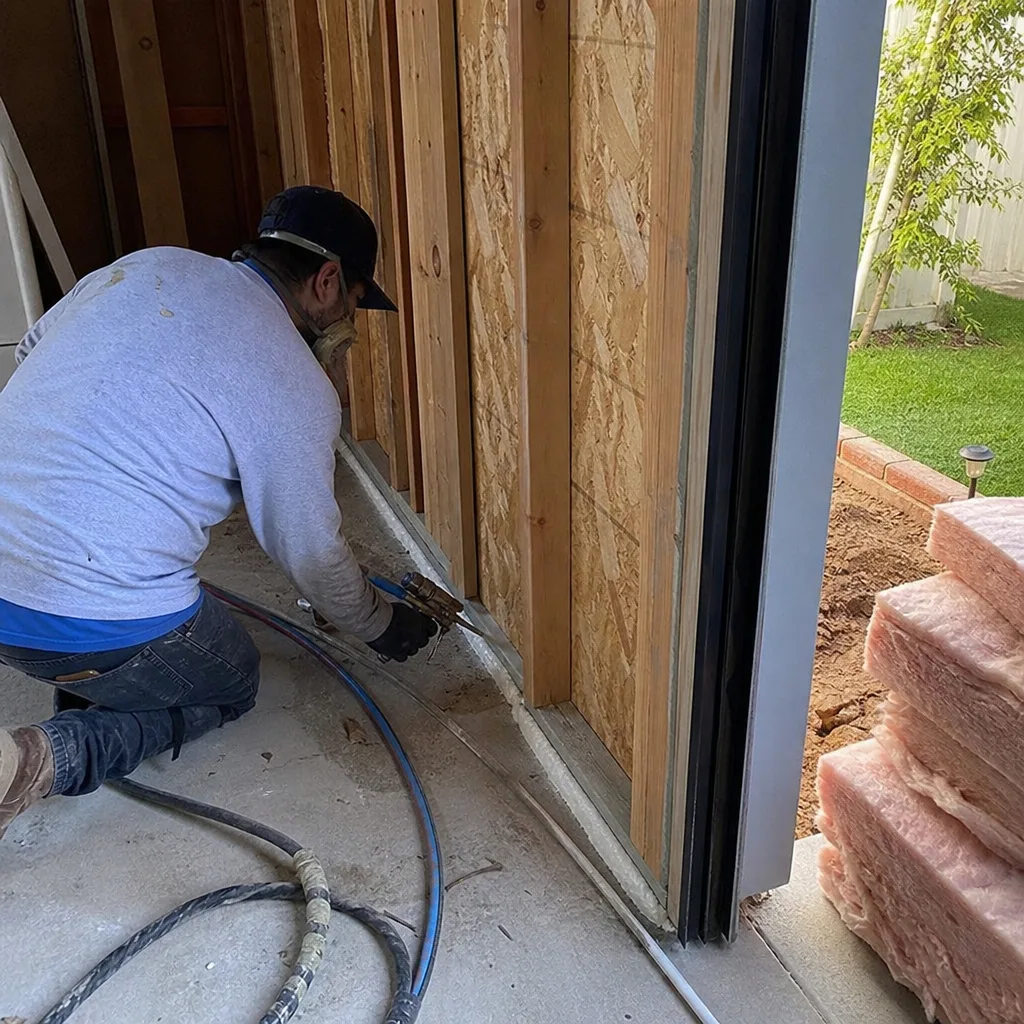
Huntington Beach’s location on the Pacific coast creates ADU risks that inland Orange County cities don’t face. Understanding these local conditions helps you evaluate whether a contractor has genuine local experience or is applying inland assumptions to a coastal project, as covered in The Complete Guide to ADU in Huntington Beach.
Corrosive Marine Environment
Salt air within two miles of the coast accelerates corrosion of unprotected steel and certain fasteners. Standard galvanized hardware acceptable in Anaheim or Santa Ana fails prematurely in Huntington Beach’s marine layer. The permit set should specify hot-dip galvanized or stainless steel fasteners for all exterior connections, and pressure-treated lumber rated for ground contact even above-grade.
We’ve replaced premature failures in Garage Conversion ADU in Huntington Beach projects where inland contractors used standard hardware. The cost to remove and replace corroded connectors in a finished structure exceeds the original material cost by 10-15x.
Liquefaction Zones and Seismic Design
Much of Huntington Beach sits in Zone D or E liquefaction hazard areas, per California Geological Survey maps. This doesn’t prohibit construction, but it requires specific foundation design: deeper embedment, wider footings, or engineered fill replacement. A contractor who proposes a standard slab-on-grade without geotechnical review is gambling with your structural integrity.
The 2015 founding of Ellery ADU Studio coincided with California’s major ADU law changes, and we’ve navigated Huntington Beach’s seismic requirements from the beginning. Our permit sets include site-specific foundation details for every coastal lot we work on.
Title 24 and Coastal Climate Zone 3
Huntington Beach falls in California Climate Zone 3, with mild winters and moderate cooling loads. This should simplify Title 24 compliance, but contractors unfamiliar with the zone sometimes oversize HVAC systems, triggering mandatory HERS verification that adds cost and delay. Proper load calculations using ACCA Manual J, sized for Zone 3 specifically, avoid this pitfall.
Coastal Development Permit Requirements
Properties west of Pacific Coast Highway, or in designated coastal zones, may require California Coastal Commission review in addition to city permits. This adds 30-90 days to timeline and requires specific documentation: coastal development permit application, biological survey if native habitat is present, and sometimes parking impact analysis. A contractor who hasn’t identified this requirement in the initial timeline estimate hasn’t done adequate due diligence.
Neighborhood-Specific Setback Variances
Huntington Beach’s older neighborhoods, including Downtown and parts of Oak View, have non-conforming lots with setback requirements stricter than the standard city code. A permit set using standard setbacks without checking the specific parcel’s zoning will be rejected. Verify through the city’s zoning information portal, or request a preliminary zoning review before committing to design.
What a Clean Contract Looks Like: The Haven Standard
After reviewing hundreds of competitor contracts for clients seeking second opinions, we’ve codified what a protective ADU contract should contain; explore our more guides & resources for additional homeowner protections. We call this The Haven Standard, and it governs every project Ellery ADU Studio undertakes.
Clause 1: Written Price Before Any Work Starts. Every project is quoted with a complete, line-item written price before any design or construction work begins. No “call for a quote.” No “we’ll figure it out as we go.” The price you see is the price you pay, absent only owner-requested changes documented in writing.
Clause 2: Documented Photo Record on Every Visit. Our crews photograph every site condition, every installation, and every inspection. You receive these photos, not a summary. When we find the existing garage slab is 4 inches thick, within range for conversion, you see the measurement, not a note in a report.
Clause 3: Subcontractor Disclosure Before Work Begins. Every company performing work on your property is named in writing, with license numbers and insurance certificates, before they arrive. No surprises, no unlicensed labor.
Clause 4: 365-Day Done Right Promise. If the finished ADU is not built to the permitted drawings, we make it right. This is not a generic “satisfaction guarantee.” It’s a specific contractual obligation tied to the permit set, enforceable in writing.
Clause 5: No Surprises. The scope is locked at signing. No door-side upsells, no “while we’re here” additions, no scope creep disguised as necessary corrections. Changes require your written approval and a corresponding price adjustment.
Clause 6: Milestone-Based Payments, Verified by Inspection. Progress payments are due only after passed inspections, not calendar dates. Your retention is protected until final completion and your sign-off.
This standard applies across all our services: ADU Design & Permitting in Huntington Beach, garage conversions, new detached ADUs, and site preparation. The single-contract design-build model means no designer-builder blame gap: one company, one written price, one accountable party.
Common Mistakes to Avoid
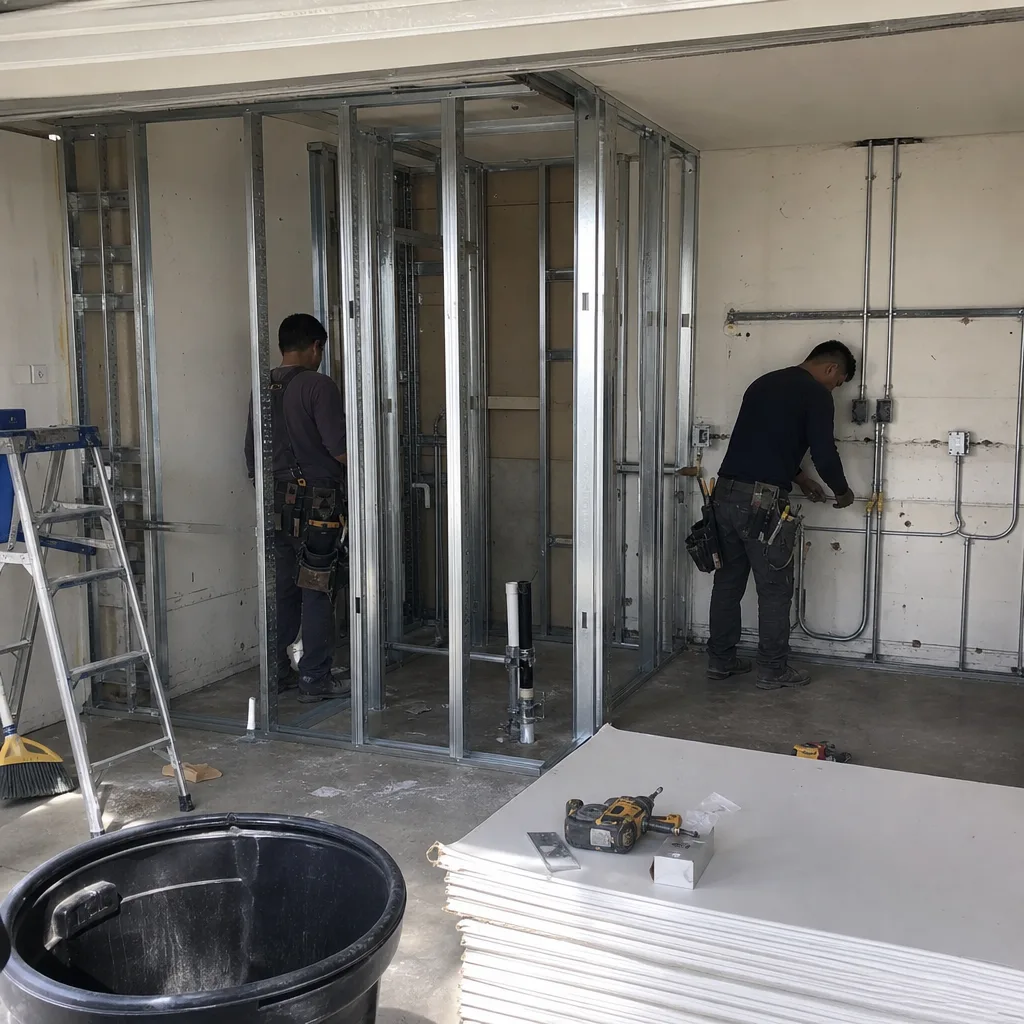
- Accepting a “design allowance” without a design contract. A $5,000 “design allowance” in a construction contract, with no separate design agreement, typically means no design is actually being performed. The contractor intends to use a basic plan set purchased online, which may not comply with Huntington Beach’s specific requirements.
- Assuming modular means faster permitting. Prefab and modular systems from brands like Boxabl or Tuff Shed can streamline construction, but they do not bypass local permitting. In fact, they often require additional documentation: manufacturer installation manuals, ICC-ES evaluation reports, and California engineer adaptation. A contractor who promises “permits in two weeks” for a modular ADU is misinformed or misleading.
- Ignoring the accessory structure setback on corner lots. Huntington Beach corner lots have dual frontages, which triggers stricter setback requirements on the side street. ADUs placed assuming standard side-yard setbacks can end up 5-10 feet too close to the corner property line, requiring costly relocation or variance applications.
- Paying for “permit expediting” as a separate line item. Legitimate permit expediting involves professional preparation of complete, correct applications submitted in proper order. It does not involve paying city employees for priority treatment, which is illegal. A contractor who offers “expedited permitting” for a substantial fee, without explaining their actual process, is selling opacity.
- Failing to verify the contractor’s physical business address. Virtual offices and mail drops are common among transient contractors. Verify that the business address on the CSLB license matches a physical location you can visit. Ellery ADU Studio maintains our design studio in Huntington Beach; we welcome client visits by appointment.
- Neglecting to request a final lien release. California law requires contractors to provide a final lien release upon completion and final payment. Without this document, subcontractors or material suppliers can file mechanics liens months after project completion, even if you paid the prime contractor in full.
- Choosing price over documentation. The lowest bid is rarely the cheapest project. A contractor with thorough documentation, clear specifications, and a written warranty may quote 15% higher upfront, but the total project cost, including change orders and correction work, typically runs lower. Our 900+ ADUs since 2015 have averaged 3% change order volume, versus 25-40% industry typical.
When to Call a Professional
Call a licensed design-build professional when you have a written estimate in hand and something feels uncertain, when your permit application has been rejected and the explanation doesn’t make sense, or when construction has started and the site conditions don’t match what was described in your contract. These are precisely the scenarios where Ellery ADU Studio Huntington Beach offers our Free Second Opinion: we review your existing documents, identify the specific red flags, and explain your options in plain language.
For homeowners in Huntington Beach considering any ADU project, from garage conversion to new detached unit, we provide free estimates with written pricing before any work begins. Call (562) 263-3350 to schedule. A live person answers 24/7.
Frequently Asked Questions
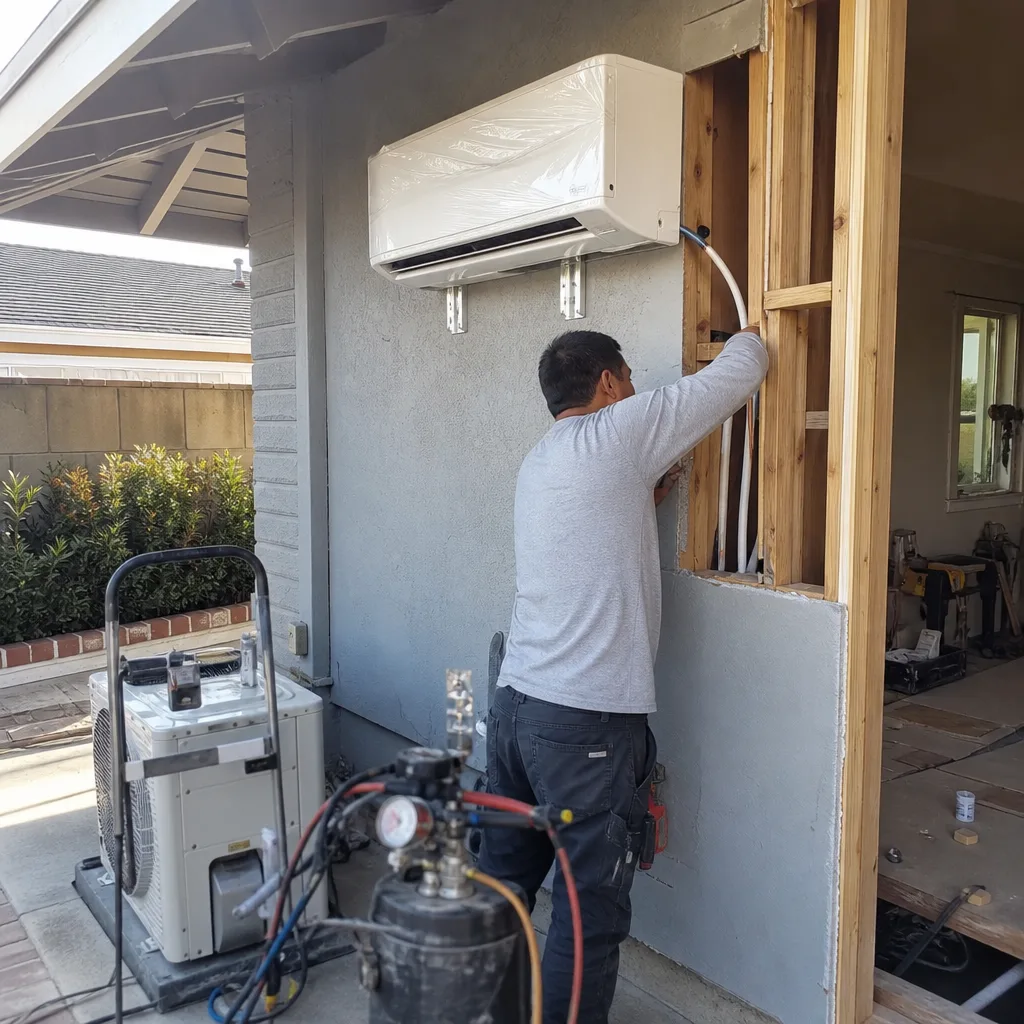
Garage conversion ADUs in Huntington Beach typically run $180,000-$280,000 all-in, from drawings through final inspection, while new detached ADUs range from $320,000-$480,000 depending on size, site conditions, and finish level. These ranges reflect coastal foundation requirements, Title 24 energy compliance, and current material costs in the Orange County market. Every Ellery ADU Studio project is quoted with a written price before any work begins, per Haven Standard Clause 1. Call (562) 263-3350 for a specific estimate on your property.
Decline, and consider reporting the request to the CSLB. California Business and Professions Code §7159.5 makes it illegal for a home improvement contractor to accept more than the lesser of 10% or $1,000 as a down payment. Contractors who violate this basic consumer protection law often violate others. A legitimate design-build studio in Huntington Beach will structure payments around milestone completion, not large upfront deposits.
A permit-ready set includes: fully dimensioned architectural plans, structural calculations stamped by a California-licensed engineer, Title 24 energy compliance documentation with software output, a site plan showing all setbacks and existing structures, and drainage/grading plans for sites with slope or drainage concerns. Ask to see these specific components before signing any construction contract. At Ellery ADU Studio, we deliver the complete permit set as a defined project milestone, with city submission only after your review and approval.
Modular and prefab ADUs from manufacturers like Mighty Buildings or Plant Prefab can streamline construction but do not simplify permitting. Huntington Beach requires the same foundation design, utility connections, and inspection sequence as site-built structures, plus additional documentation: manufacturer ICC-ES reports, California engineer adaptation of standard details, and sometimes transportation damage inspection. The advantage is factory quality control; the permitting timeline is comparable. We coordinate these systems within our single-contract model.
The contractor must correct the deficiency and request re-inspection. You should receive notice of every inspection, pass or fail, with the specific code section cited. Work cannot proceed beyond the failed scope until correction and re-pass. If a contractor asks you to “just sign off” or claims the inspector “doesn’t understand the system,” this is a serious red flag. Our crews provide the documented photo record of every correction for your file.
Contact the insurer directly using the policy number from the certificate, not the contact information the contractor provides. Confirm active status, coverage limits, and that the policy extends through your project duration. Request written confirmation of additional insured status if you are named. This five-minute call prevents exposure to uninsured losses. Ellery ADU Studio’s license number and insurance details appear on every proposal; we encourage direct verification.
The Bottom Line
The warning signs of a failing ADU project appear in the contract, the permit set, and the payment structure, long before construction problems become visible. Huntington Beach homeowners, working with coastal soils, strict energy codes, and some of California’s most detailed zoning requirements, cannot afford to discover these problems reactively. Verify the license, verify the insurance, demand permit-ready drawings before construction pricing, and structure payments around passed inspections, not calendar dates. The contractors who resist this transparency are revealing exactly what you need to know.
Written by Nadia Ellery, Owner at Ellery ADU Studio Huntington Beach, serving Huntington Beach since 2015.